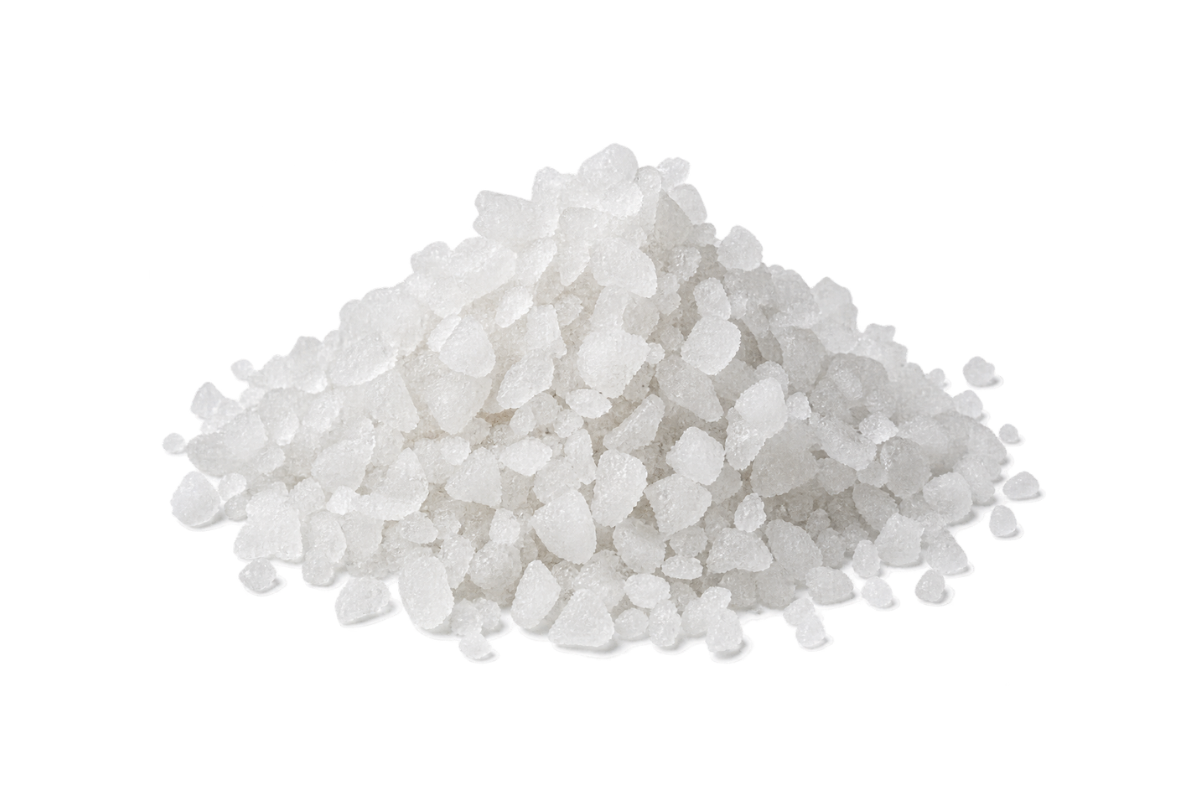
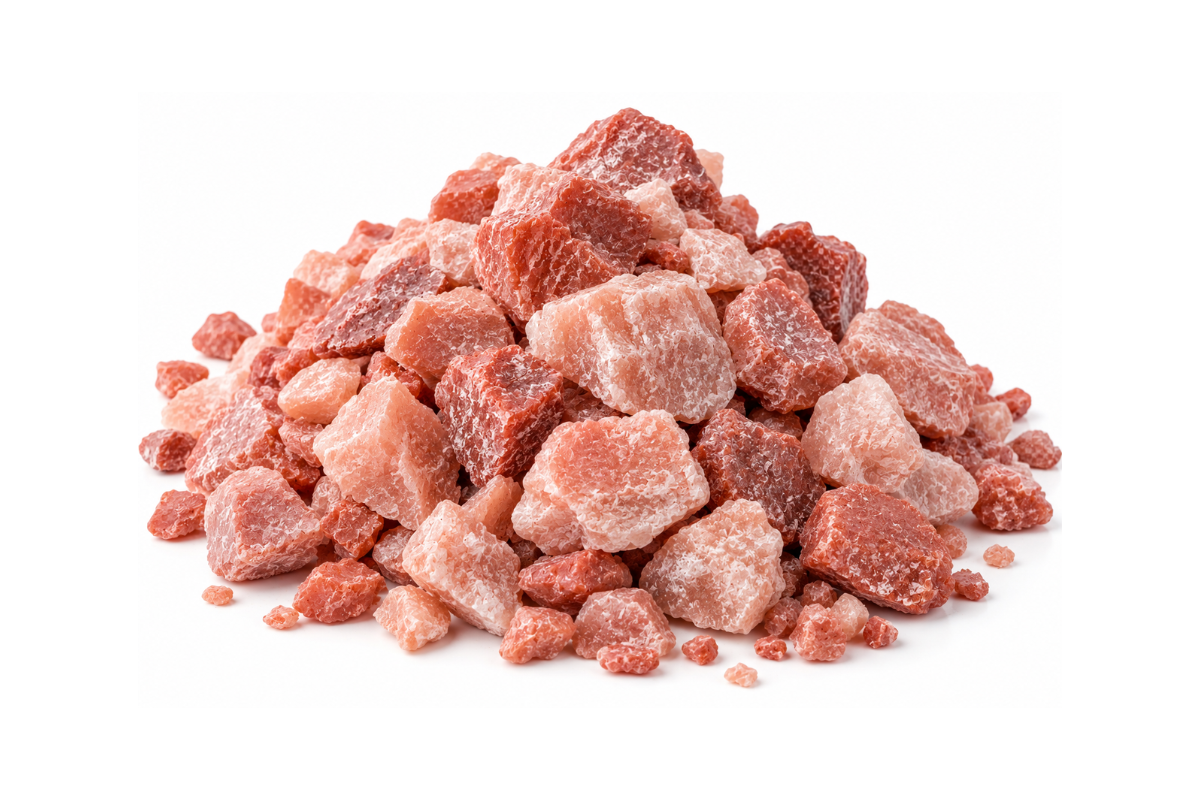
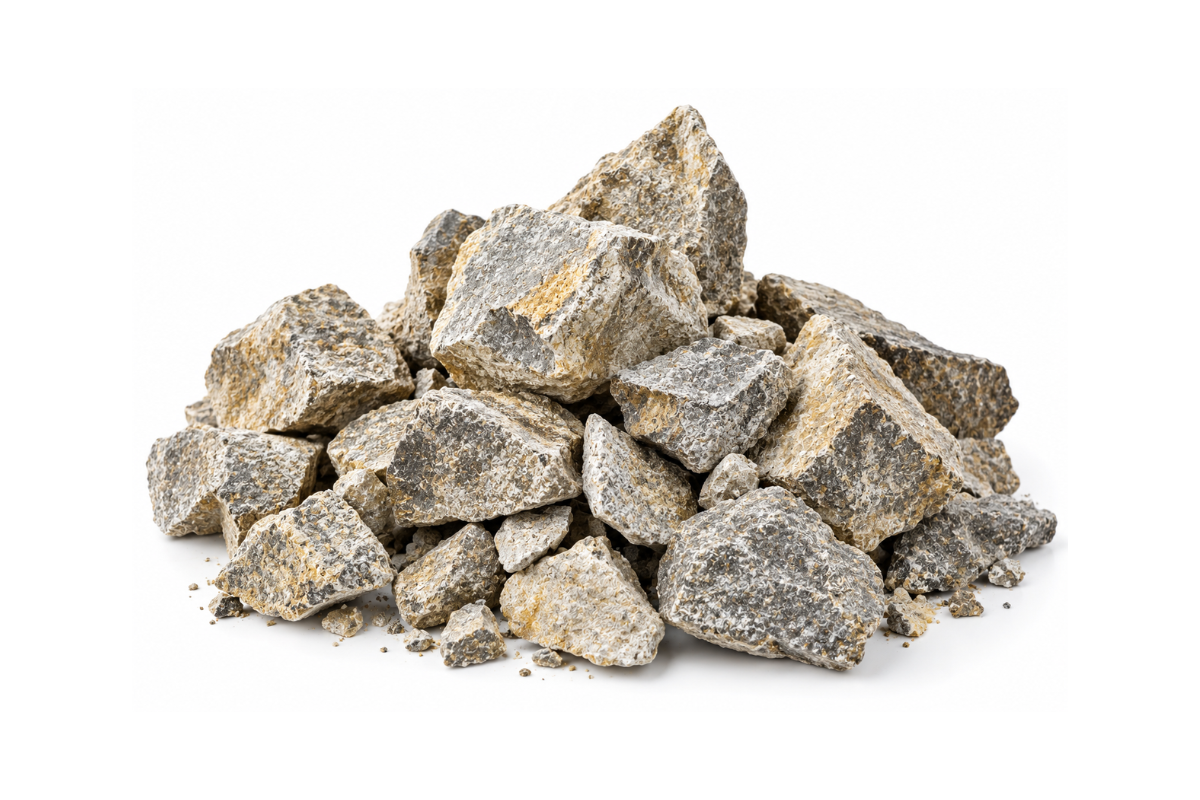
Sodium chloride (NaCl) is the feedstock for the chlor-alkali process, which produces caustic soda and chlorine – two of the most widely used industrial chemicals in the world.
Interesting Fact
India is the world’s third largest salt producer after China and the USA. Gujarat accounts for over 75% of India’s total salt production, with the Rann of Kutch being the largest salt-producing region.
Chemicals
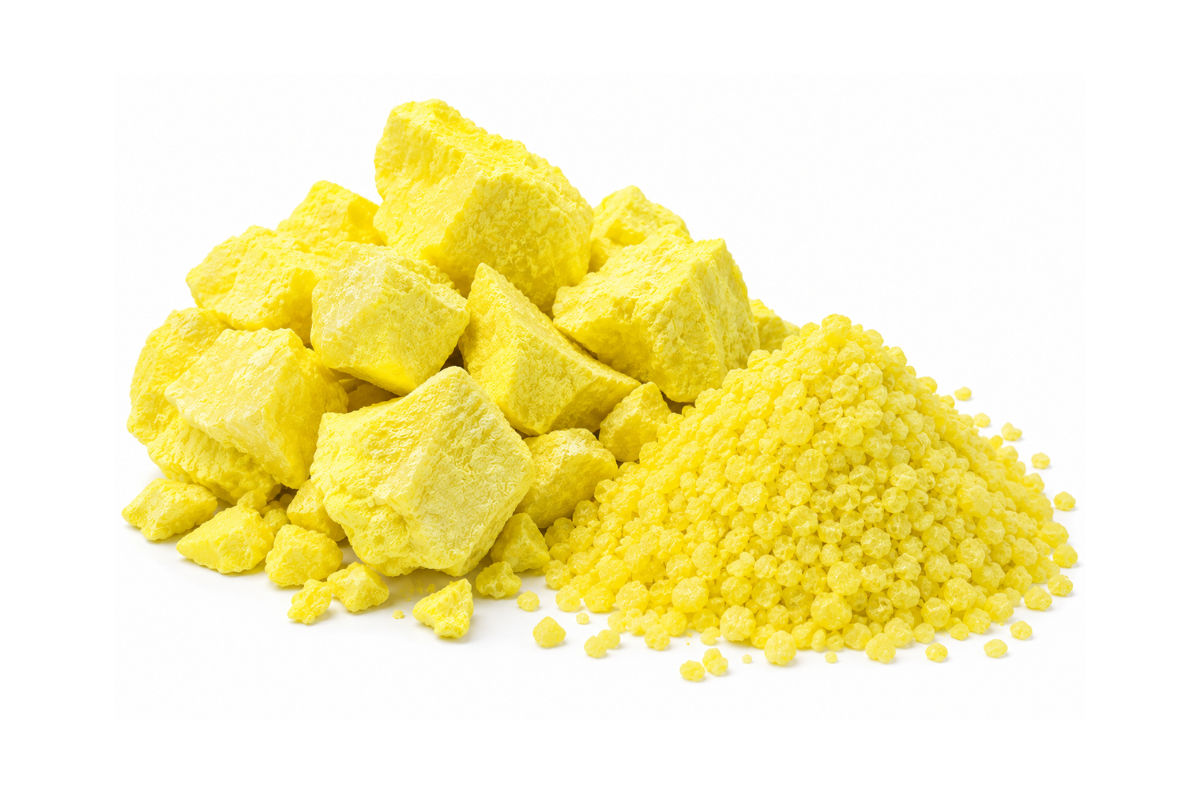
Sulphur Lumps
Applications:
Fertilizer, Sulphuric Acid, Rubber, Chemical
Educational Fact
Sulphur is the starting point for sulphuric acid, which is the most widely produced industrial chemical globally – used in fertilizers, batteries, metal processing and more.
Interesting Fact
More sulphuric acid is manufactured each year than any other chemical in the world, making sulphur one of the most strategically important industrial minerals.
Chemicals
Sulphur Lumps +
Grains
Applications:
Fertilizer, Chemicals
Educational Fact
Granular sulphur has faster dissolution rates in soil compared to lumps, making it more efficient as a direct soil amendment in agriculture.
Interesting Fact
Sulphur deficiency is one of the leading causes of reduced crop yield globally – sulphur fertilizers are now considered the fourth major plant nutrient after NPK.
Chemicals
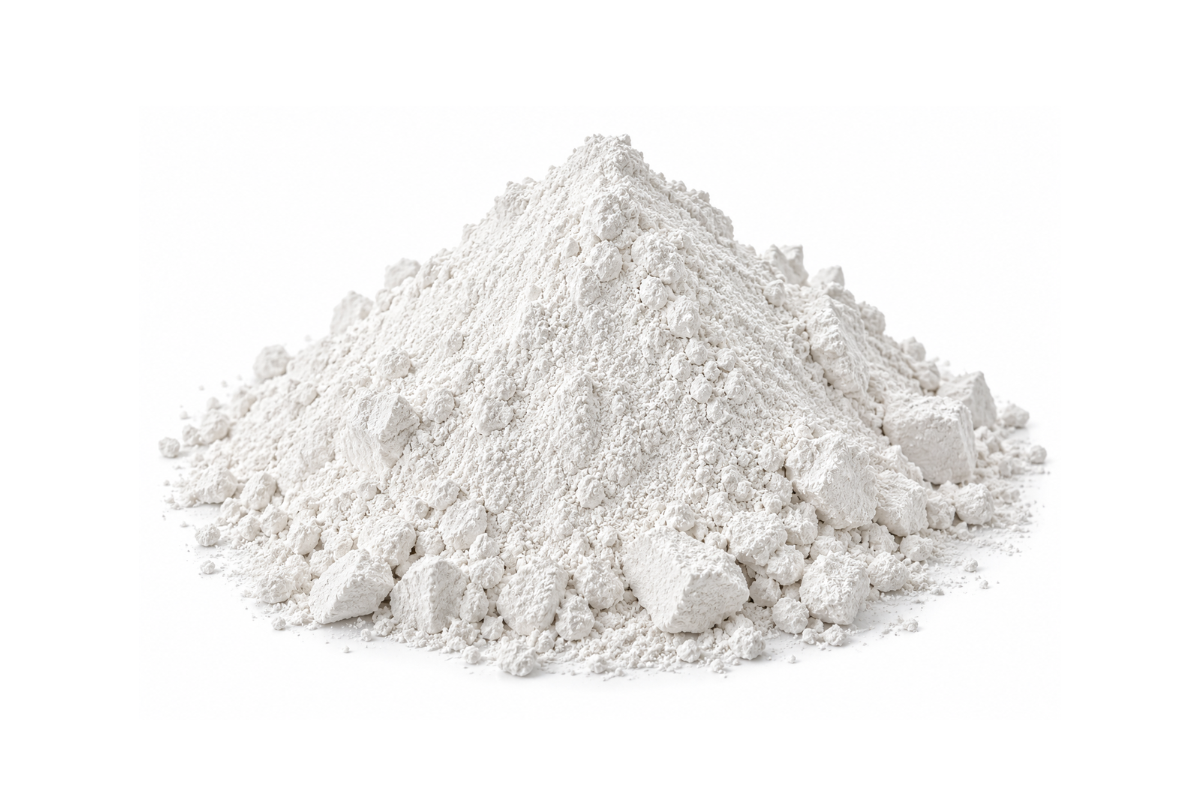
Hydrated Lime
Applications:
Paper, Water Treatment, FGD, Steel, Sugar
Educational Fact
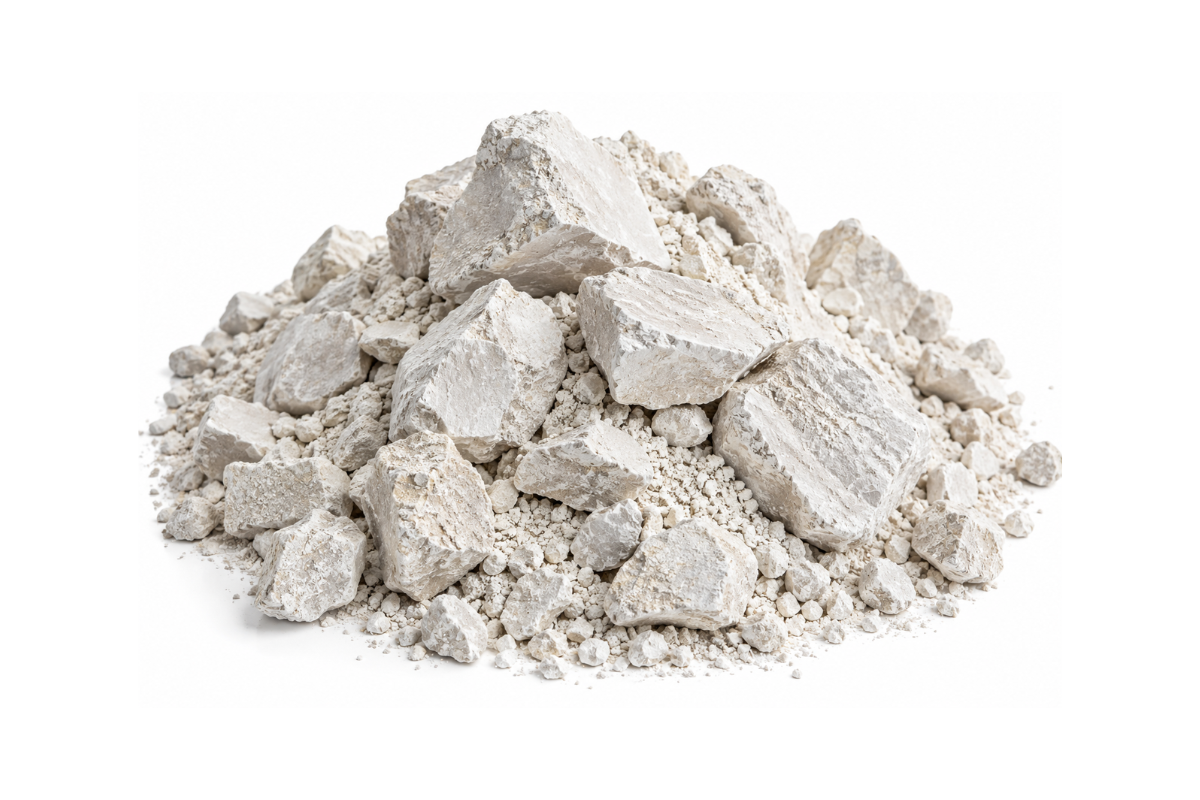
Hydrated lime (calcium hydroxide) is produced by adding water to quicklime. It is one of the oldest industrial chemicals known to mankind, used for over 2,000 years.
Interesting Fact
Modern power plants use hydrated lime to neutralise sulphur dioxide emissions from flue gases – a process called Flue Gas Desulphurization (FGD) – helping reduce acid rain.
Chemicals
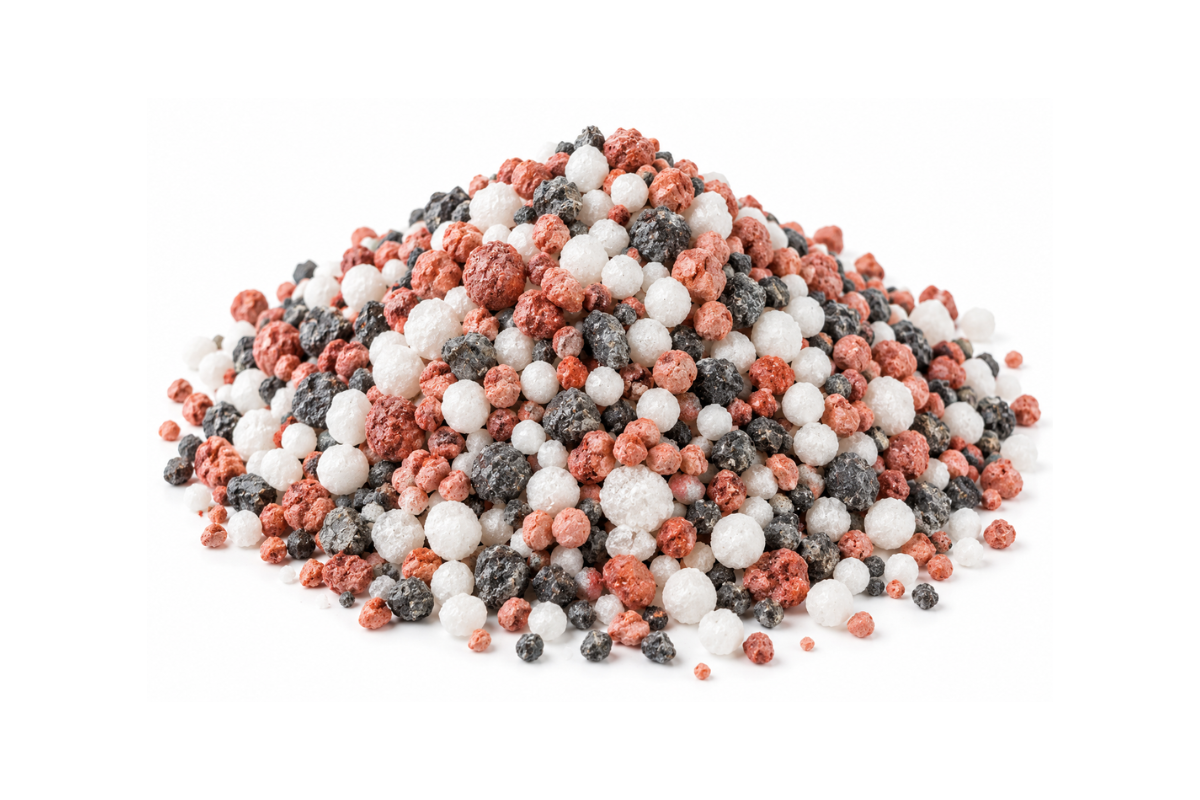
NPK
Applications:
Fertilizer, Agriculture
Educational Fact
NPK stands for Nitrogen, Phosphorus and Potassium -the three primary macronutrients that plants need to grow. Each element supports a different function: nitrogen for leaves, phosphorus for roots, potassium for overall health.
Interesting Fact
The NPK ratio on a fertilizer bag is like a nutritional label for plants – a 20-20-13 means 20% nitrogen, 20% phosphorus and 13% potassium by weight.
Chemicals
Potash
Applications:
Fertilizer, Agriculture
Educational Fact
Potash refers to potassium containing minerals used in fertilizers. Potassium strengthens plant cell walls, improves drought resistance and enhances fruit and grain quality.
Interesting Fact
Over 95% of the world’s potash production goes directly into fertilizers – it is one of the three pillars of modern agriculture alongside nitrogen and phosphorus.
Chemicals
Potash
Applications:
Fertilizer, Phosphoric Acid
Educational Fact
Rock phosphate is the primary natural source of phosphorus – an element essential for energy transfer in all living cells and the backbone of DNA and RNA.
Interesting Fact
All the phosphorus in the food we eat traces back to rock phosphate mines. Unlike nitrogen phosphorus cannot be fixed from the air – every atom must come from the earth.
Minerals
Bauxite
Applications:
Alumina Refinery, Refractories, Cement
Educational Fact
Bauxite is the primary ore from which aluminium is extracted. It takes approximately 4-5 tonnes of bauxite to produce 1 tonne of aluminium metal through the Bayer process.
Interesting Fact
Aluminium is the most abundant metal in the Earth’s crust, yet it was once more valuable than gold – Napoleon III reserved aluminium cutlery for his most honoured guests.
Minerals
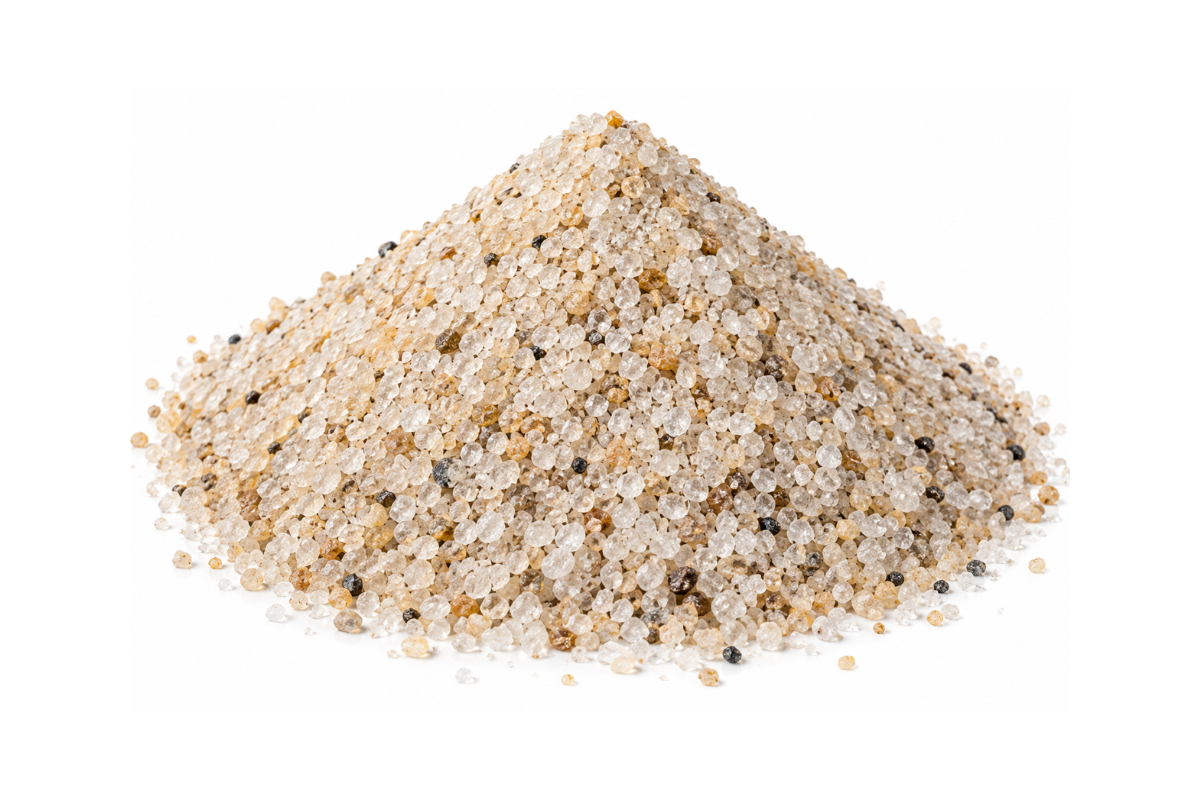
Silica Sand
Applications:
Glass, Foundry, Ceramics, Oil & Gas
Educational Fact
Silica sand consists primarily of silicon dioxide (SiO2). When heated above 1,700°C it melts and can be cooled into glass – one of the most ancient manufacturing processes known.
Interesting Fact
The glass in your smartphone screen is made from ultra-pure silica sand processed to 99.9%+ purity – the same mineral used in ancient Egyptian glassmaking 3,500 years ago
Minerals
Phospho Gypsum
Applications:
Cement, Plasterboard, Soil
Educational Fact
Phospho gypsum is a byproduct of phosphoric acid production from rock phosphate. For every tonne of phosphoric acid produced, approximately 5 tonnes of phospho gypsum is generated.
Interesting Fact
Farmers use phospho gypsum as a soil conditioner because it supplies both calcium and sulphur – two secondary nutrients – without changing the soil pH.
Minerals
Red Mud
Applications:
Cement, Iron Recovery
Educational Fact
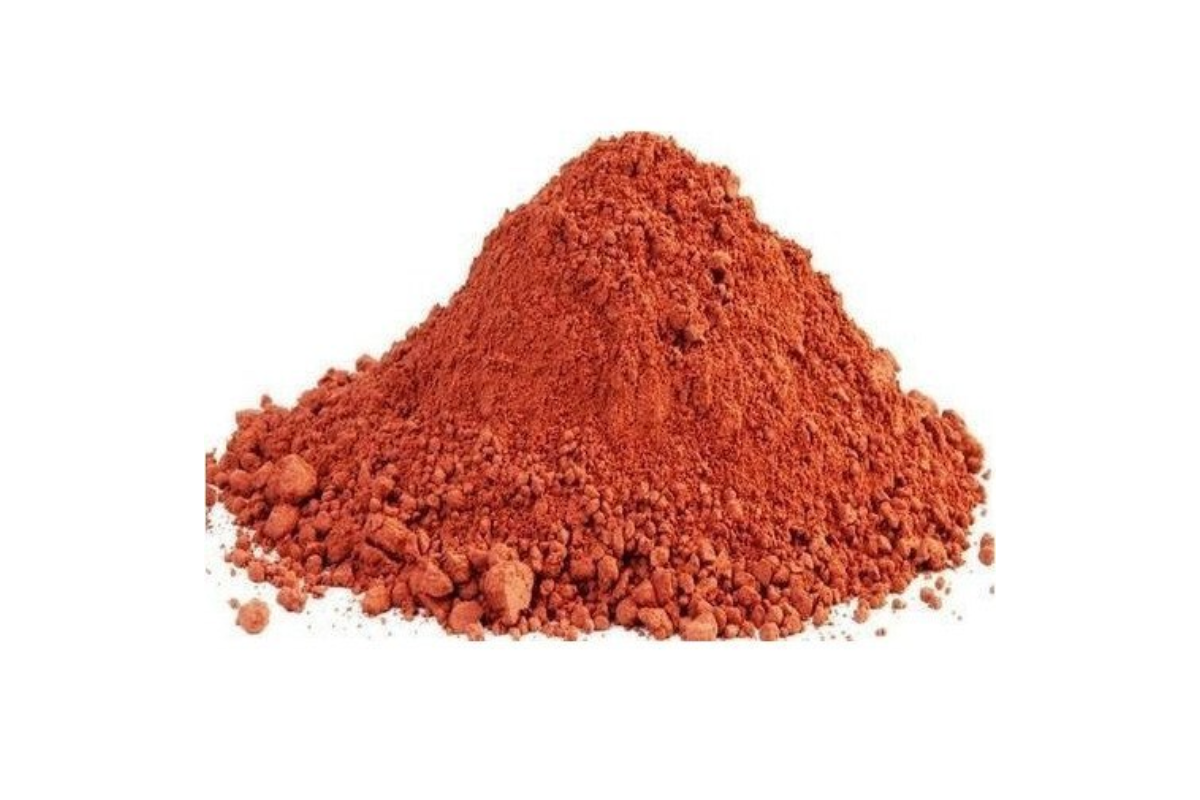
Red mud is the alkaline residue left after extracting alumina from bauxite. Its red colour comes from iron oxide content, which can range from 30-60% by weight.
Interesting Fact
Globally, approximately 170 million tonnes of red mud is generated every year (2023 data) – making recovery and reuse of this material one of the most important circular economy challenges in the aluminium industry.
Minerals
China Clay (Kaolin)
Applications:
Paper, Paint, Ceramics
Educational Fact
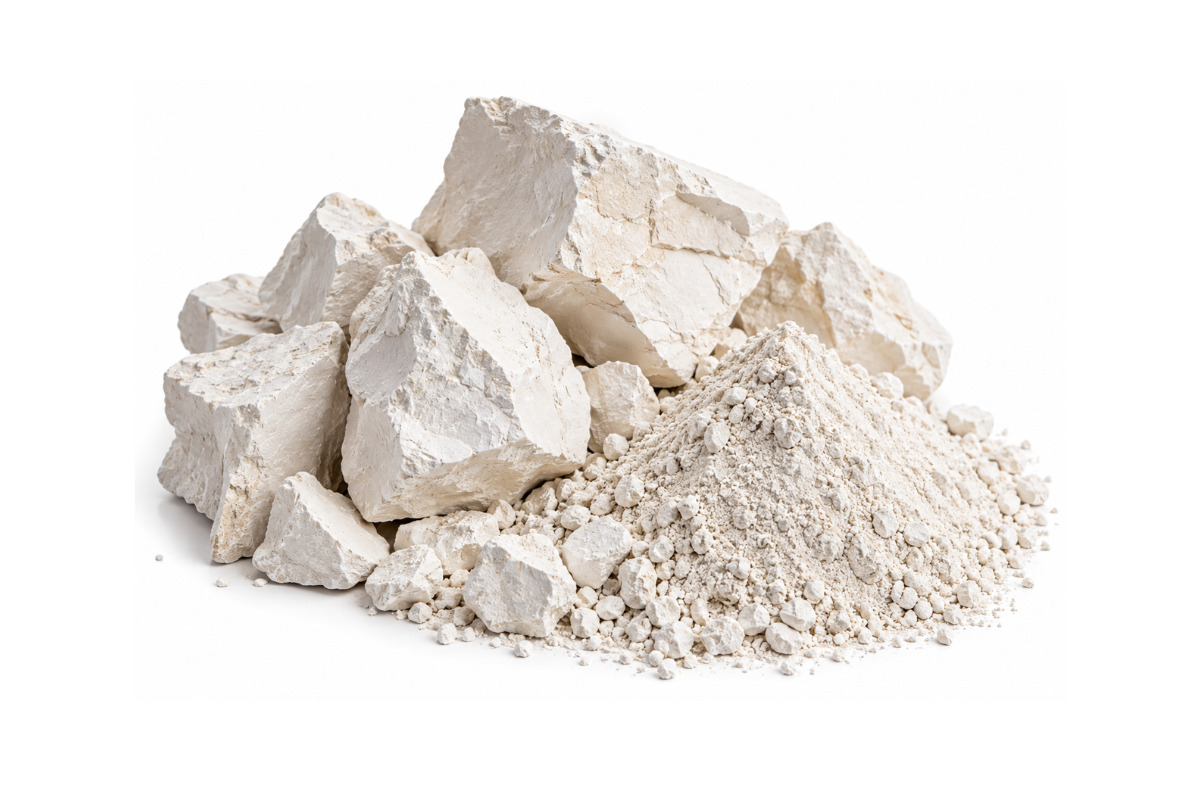
Kaolin gets its name from Gaoling, a hill in China where it was first mined. In paper manufacturing it coats the surface of paper to give it the smooth, white, printable finish we recognise in magazines.
Interesting Fact
The whiteness of kaolin comes from its almost complete absence of iron and other colouring minerals – making it one of the purest natural white minerals found on earth.
Minerals
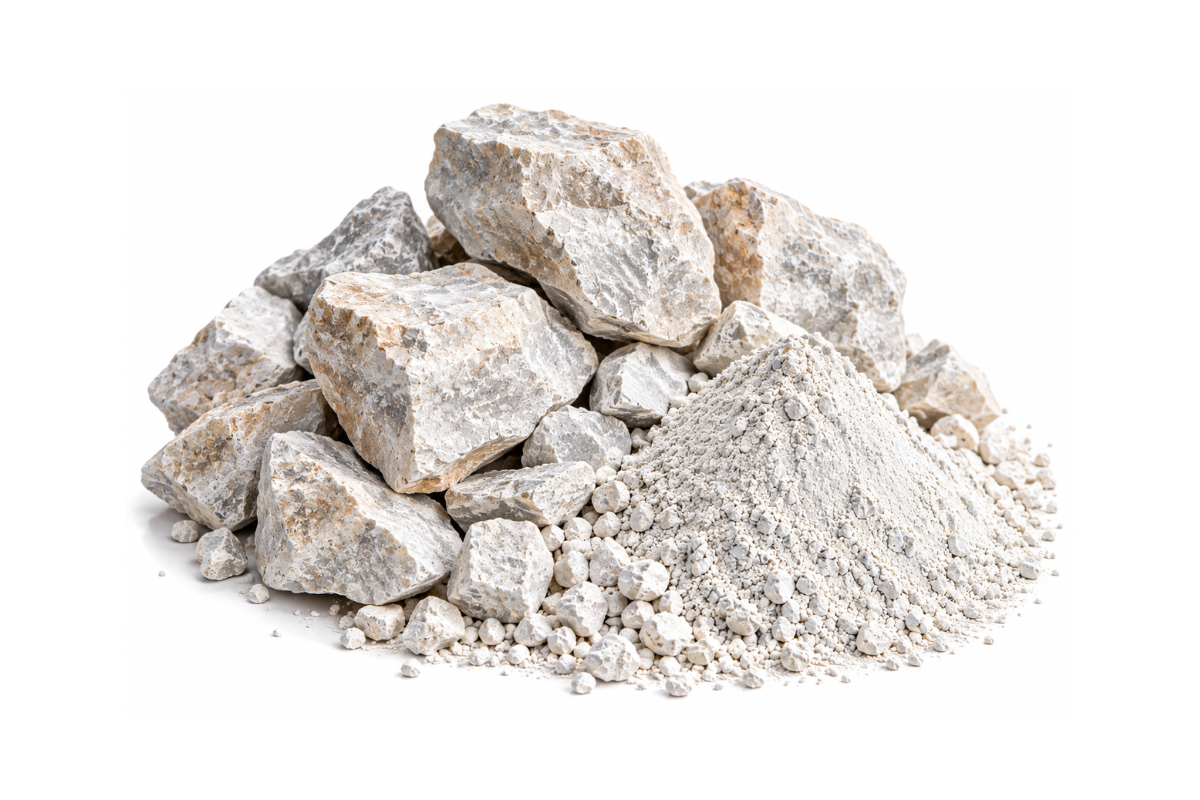
Calcite (GCC)
Applications:
Paper, Paint, Plastics
Educational Fact
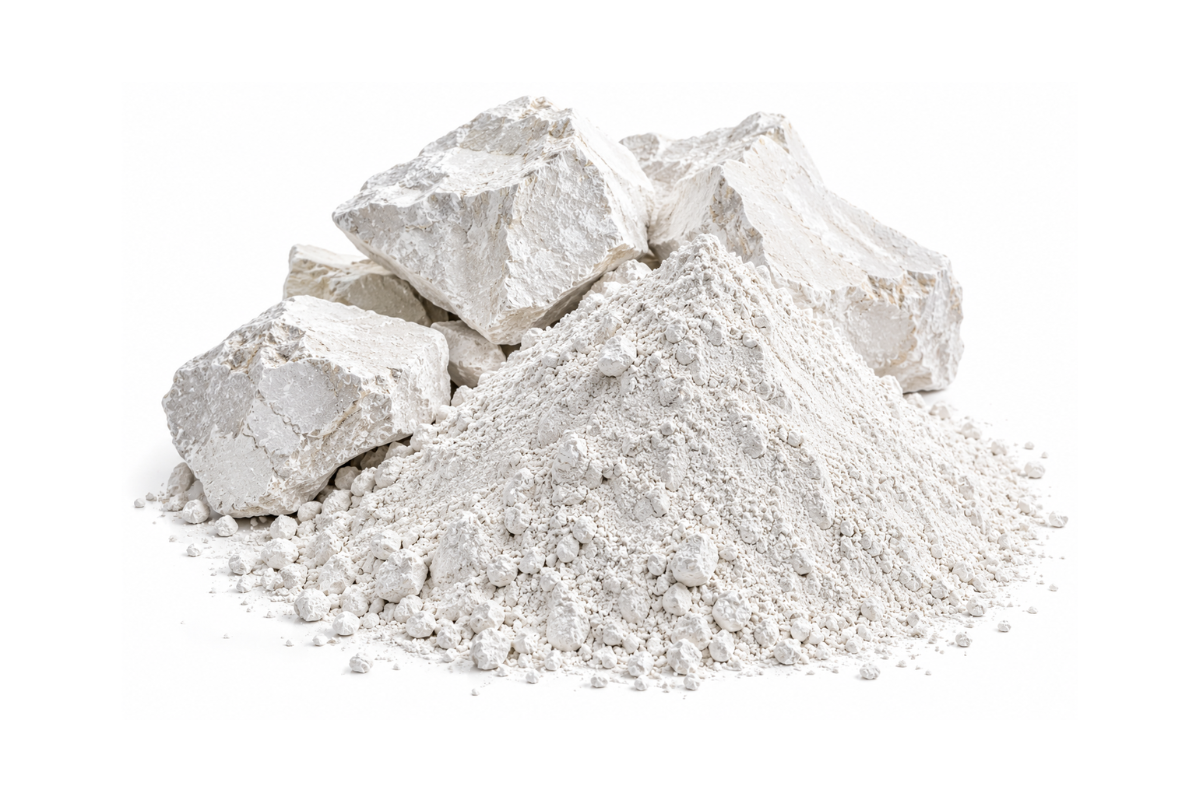
Ground calcium carbonate (GCC) is produced by mechanically grinding limestone or marble. It is the single largest mineral filler used in the paper industry – over 16 million tonnes per year globally.
Interesting Fact
Calcium carbonate is the same mineral found in seashells, coral reefs, eggshells and chalk. The white cliffs of Dover in England are made entirely of it – formed from ancient marine organisms.
Minerals
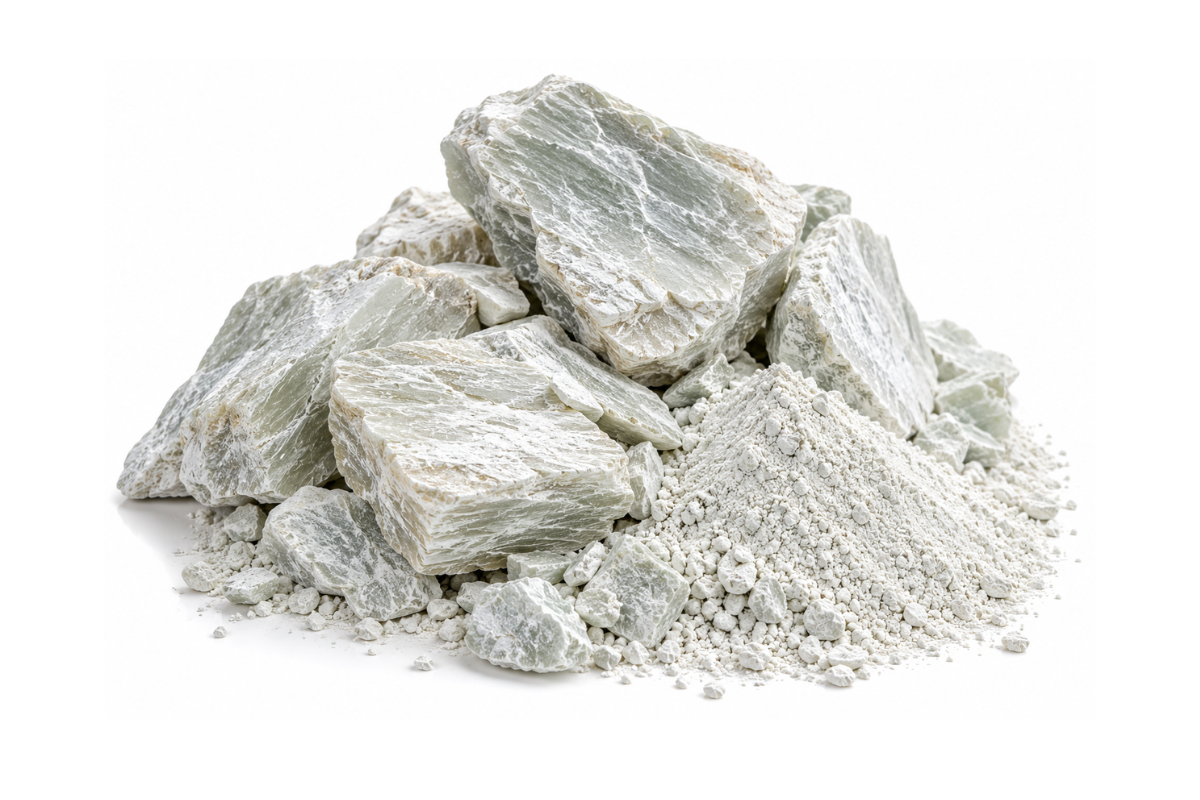
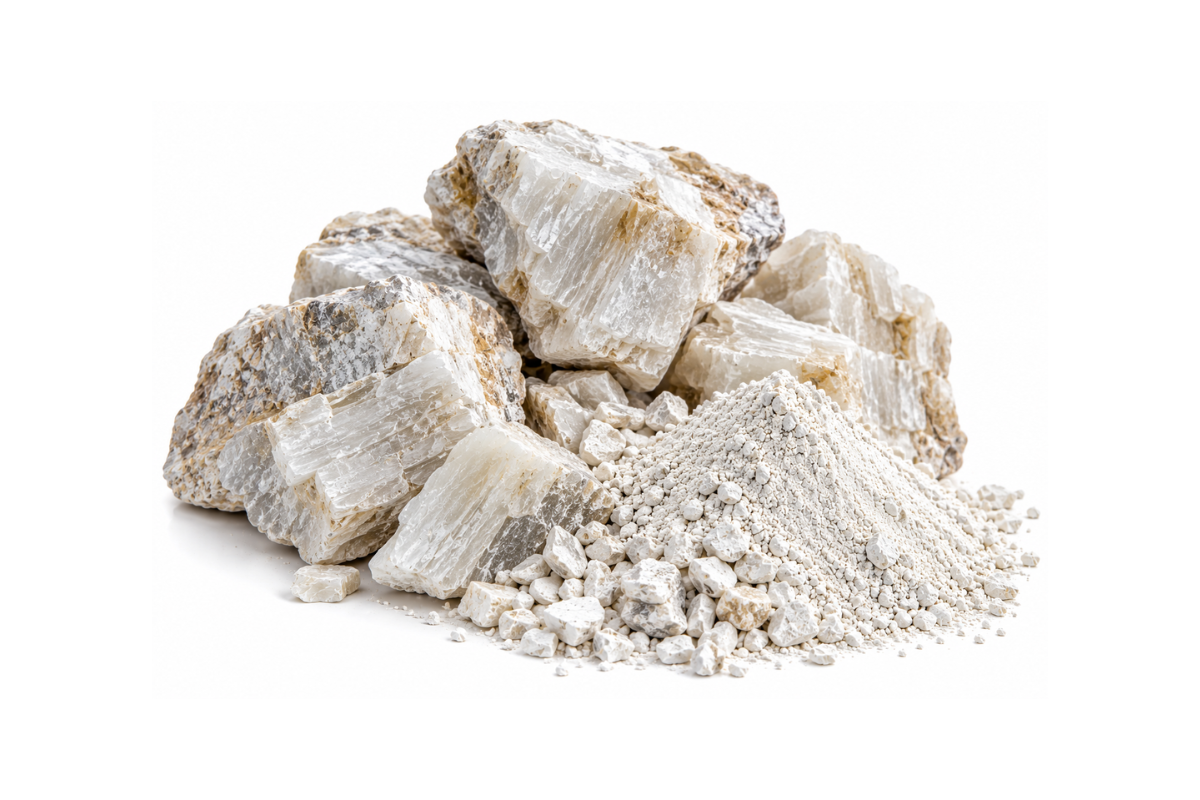
Soapstone (Talc)
Applications:
Paper, Paint, Ceramics
Educational Fact
Talc is the softest mineral on the Mohs hardness scale, rated 1 out of 10. Its extreme softness and hydrophobic nature make it ideal as a filler in paper, where it improves printability and runnability.
Interesting Fact
Talc was one of the first minerals ever mined by humans – ancient Egyptians used it as a cosmetic pigment over 4,000 years ago. It is still used in cosmetics today.
Minerals
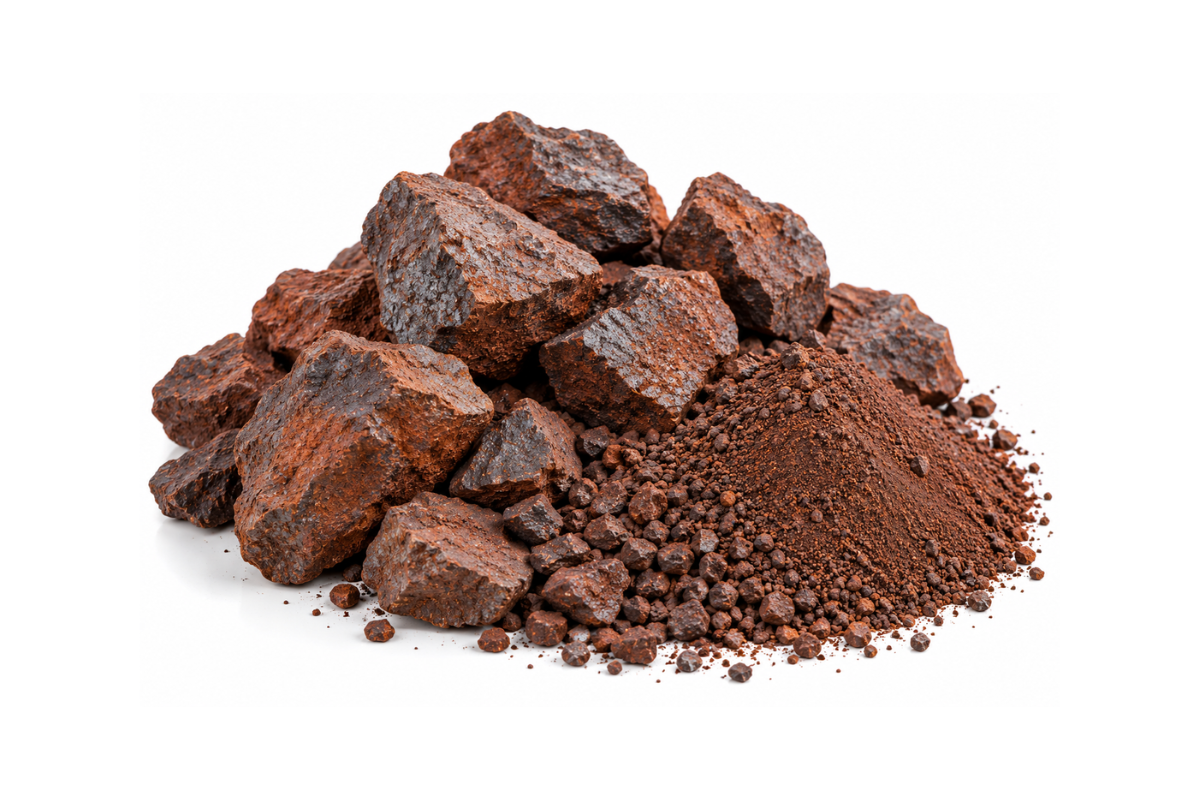
Iron Ore (incl. Fines)
Applications:
Steel, Metallurgy
Educational Fact
Iron ore is the raw material for steel production. The ore is reduced in a blast furnace using coke (carbon) to strip away the oxygen, leaving behind pig iron which is then refined into steel.
Interesting Fact
Every skyscraper, bridge, ship and car contains steel made from iron ore. Global iron ore trade exceeds 1.5 billion tonnes per year – it is the second most traded commodity in the world after oil.
Minerals
Dolomite
Applications:
Steel, Refractories, Glass
Educational Fact
Dolomite is a calcium magnesium carbonate mineral. In steelmaking it is used as a flux to remove impurities and to protect furnace linings due to its high magnesium content.
Interesting Fact
Dolomite was named after French geologist Déodat Gratet de Dolomieu in 1791. The Dolomite mountains in the Italian Alps – a UNESCO World Heritage Site – are made almost entirely of this mineral.
Minerals
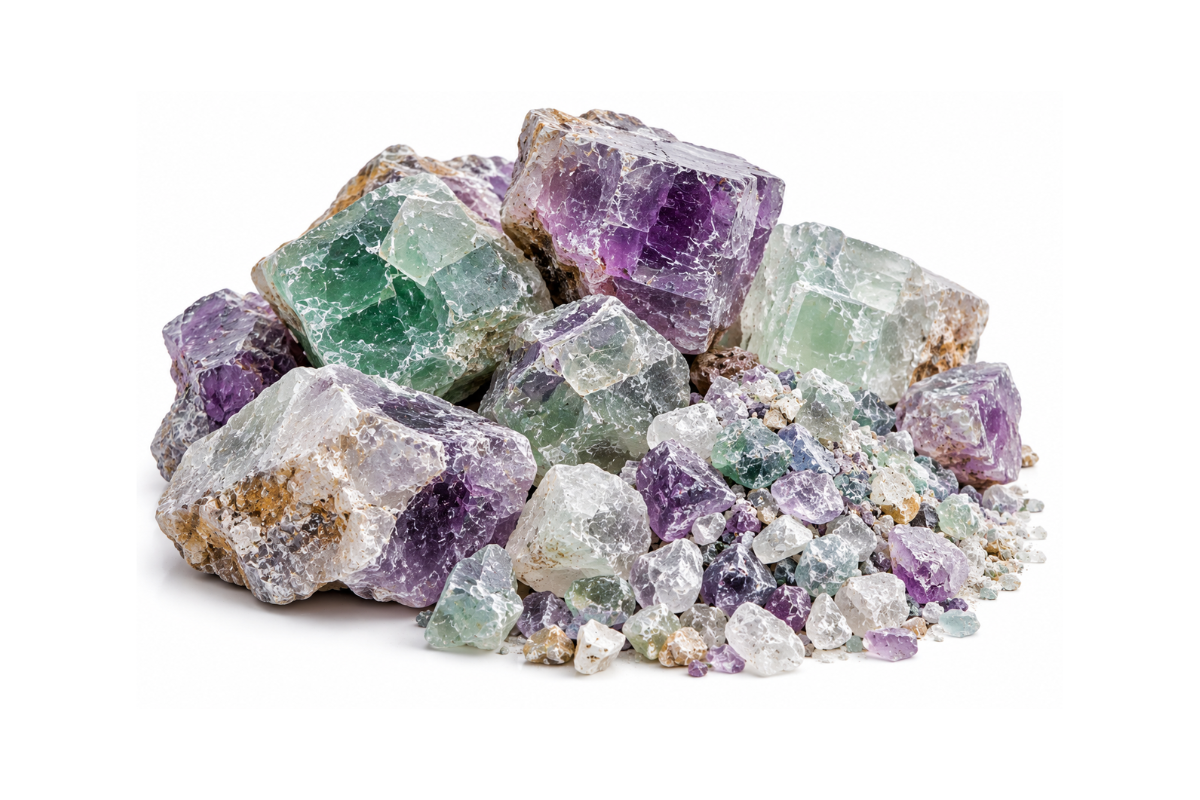
Fluorite (Fluorspar)
Applications:
Steel, Aluminium, Chemicals, HF Acid
Educational Fact
Fluorspar is the primary source of fluorine – the most reactive non-metal element. In steelmaking it acts as a flux, lowering the melting point of slag and improving its fluidity.
Interesting Fact
Fluorite was first described in 1530 and the word ‘fluorescent’ actually comes from fluorite – the mineral was one of the first substances observed to fluoresce under ultraviolet light.
Minerals
Baryte (Barite)
Applications:
Oil Drilling, Chemicals, Paper
Educational Fact
Baryte has an unusually high specific gravity of 4.3-4.5 – making it one of the heaviest non-metallic minerals. This density makes it perfect as a weighting agent in oil well drilling mud.
Interesting Fact
Without baryte, deep water oil drilling would be impossible. The heavy drilling mud prevents blowouts by counterbalancing the pressure of oil and gas underground – a safety critical application.
Minerals
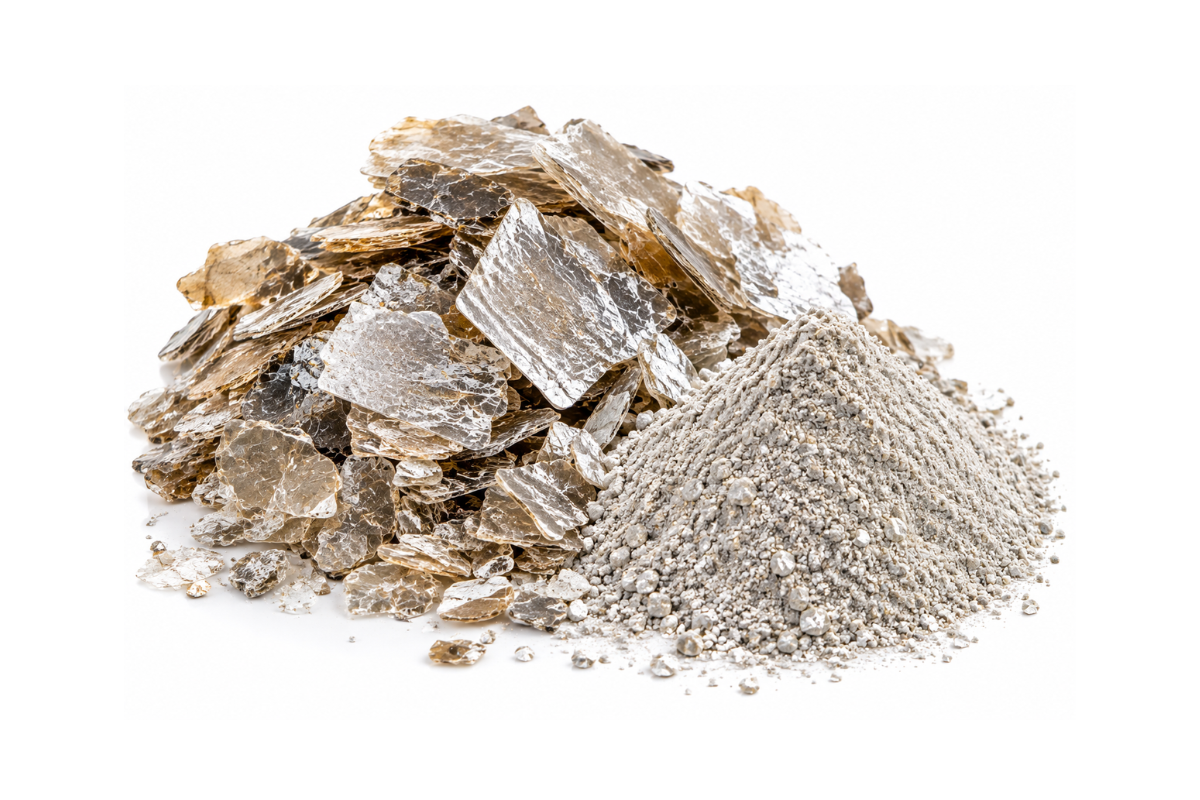
Mica Flakes & Powder
Applications:
Paint, Plastics, Electrical
Educational Fact
Mica is a group of sheet silicate minerals that split into thin, flat, flexible sheets. Its unique combination of electrical insulation and heat resistance makes it essential in electronics and electrical equipment.
Interesting Fact
India produces over 60% of the world’s mica and has done so for centuries. The shimmery effect in metallic paints, cosmetics and nail polish comes from ultrafine mica powder.
Minerals
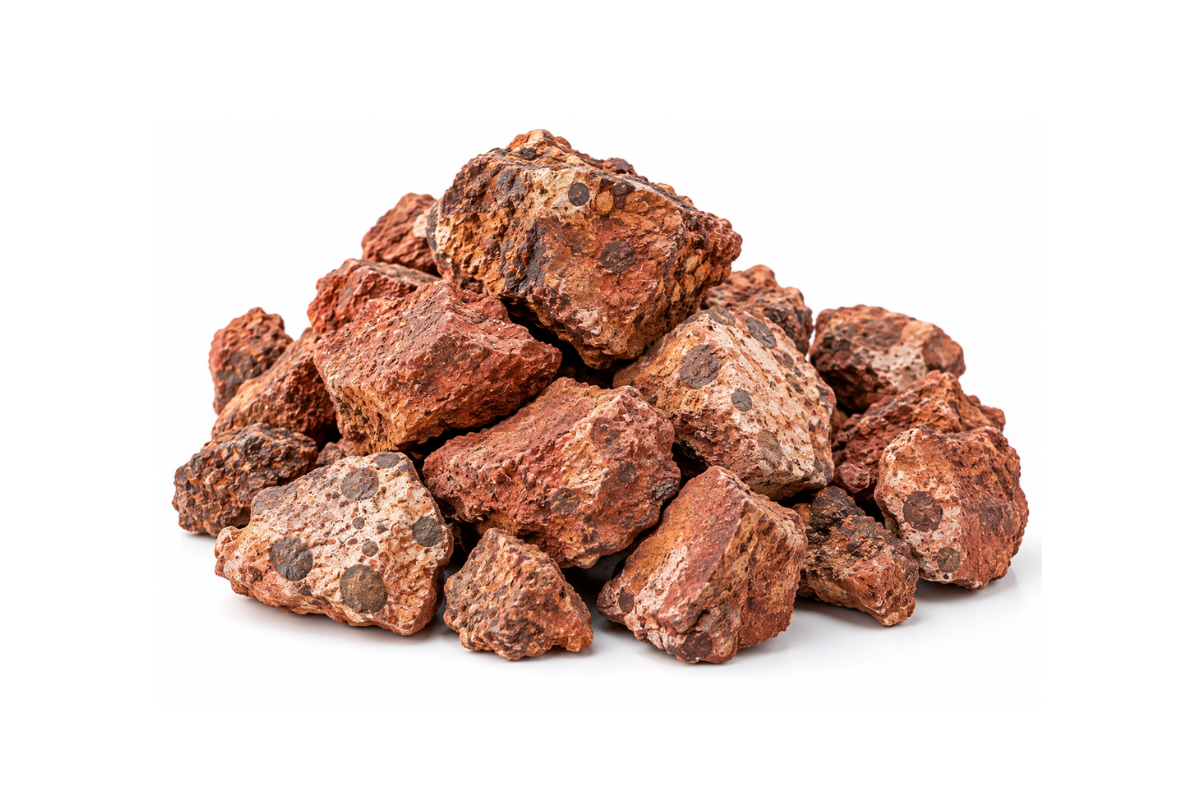
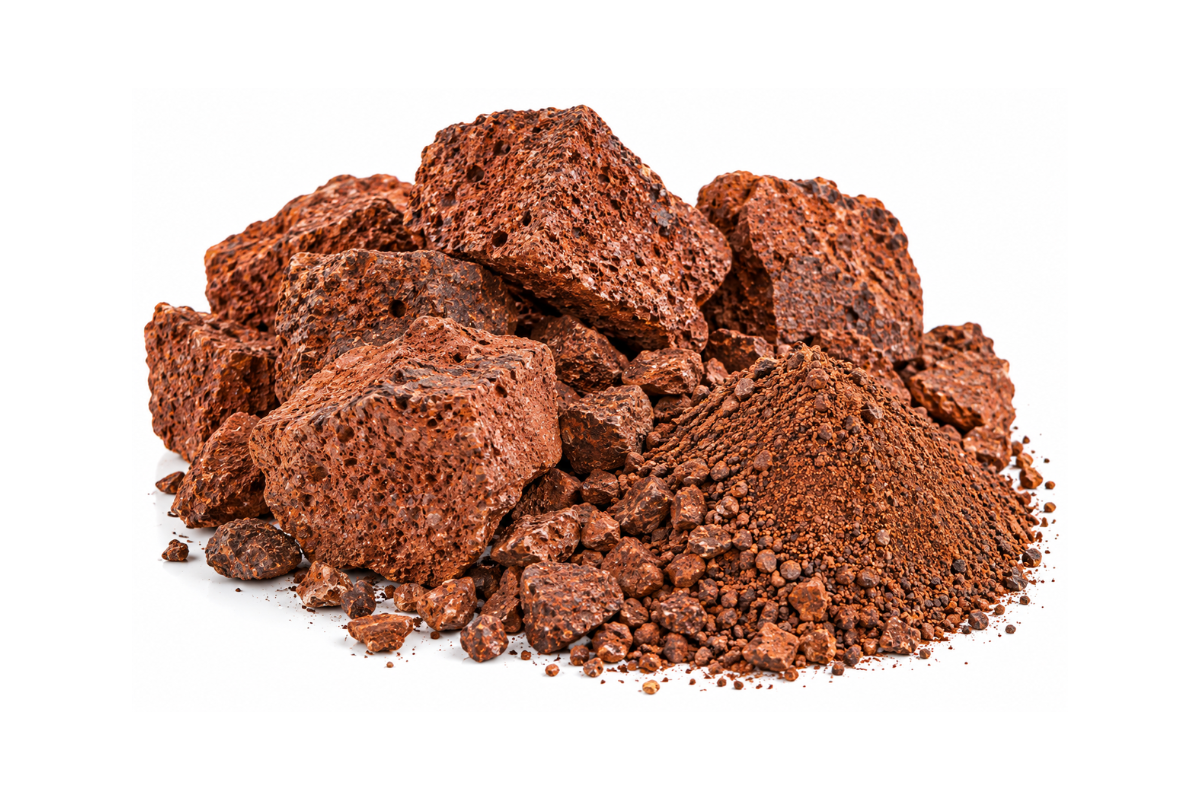
Laterite
Applications:
Cement, Iron & Steel
Educational Fact
Laterite is a red, iron-rich rock formed by intense weathering of rocks in tropical regions. It is one of the most widely distributed surface materials in India, covering much of the Deccan Plateau.
Interesting Fact
Ancient temples and monuments across Kerala and Goa – some over 1,000 years old – were built using laterite blocks. It hardens on exposure to air, making it a durable natural building material.
Minerals
Bentonite
Applications:
Drilling, Foundry, Iron Ore Pelletising
Educational Fact
Bentonite is a highly absorbent swelling clay formed from volcanic ash. In iron ore pelletising it acts as a binder – holding iron ore fines together so they can be fired into pellets for blast furnace use.
Interesting Fact
Bentonite can absorb up to 10 times its own weight in water and swell to 15 times its dry volume. This makes it essential for sealing landfills, ponds and contaminated sites against water leakage.
Minerals
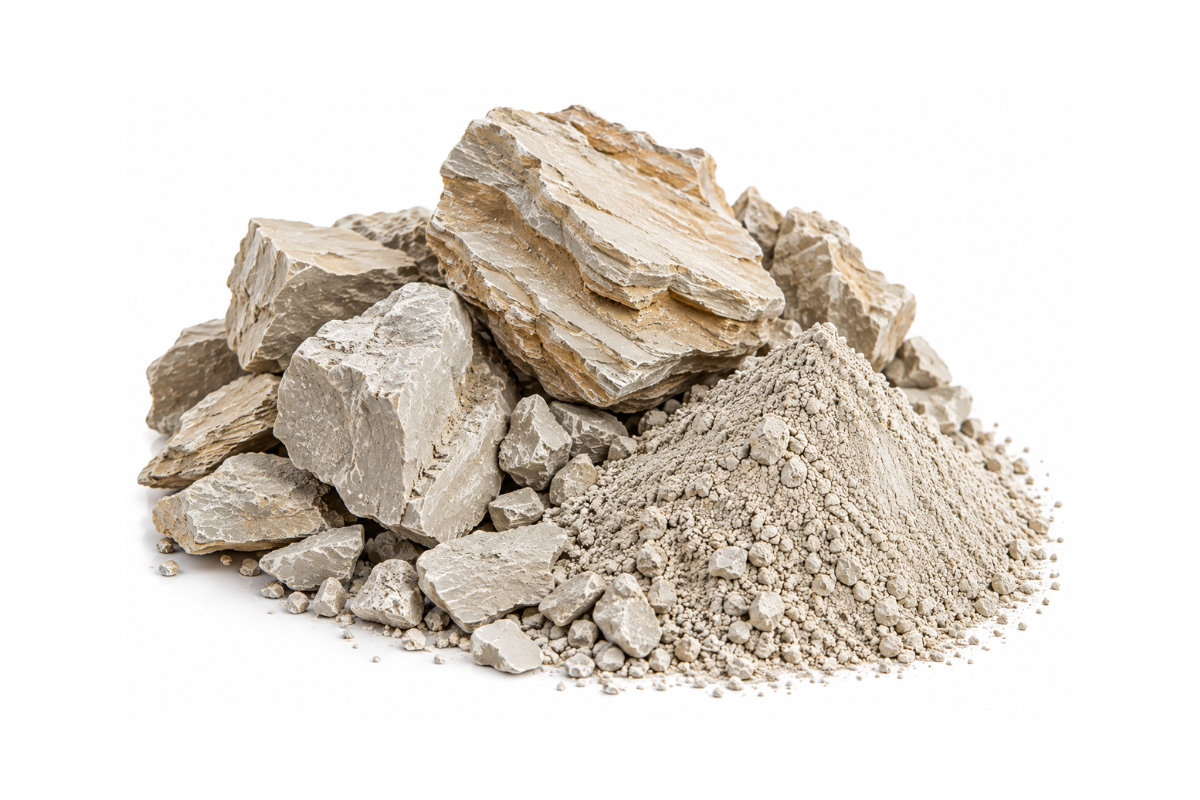
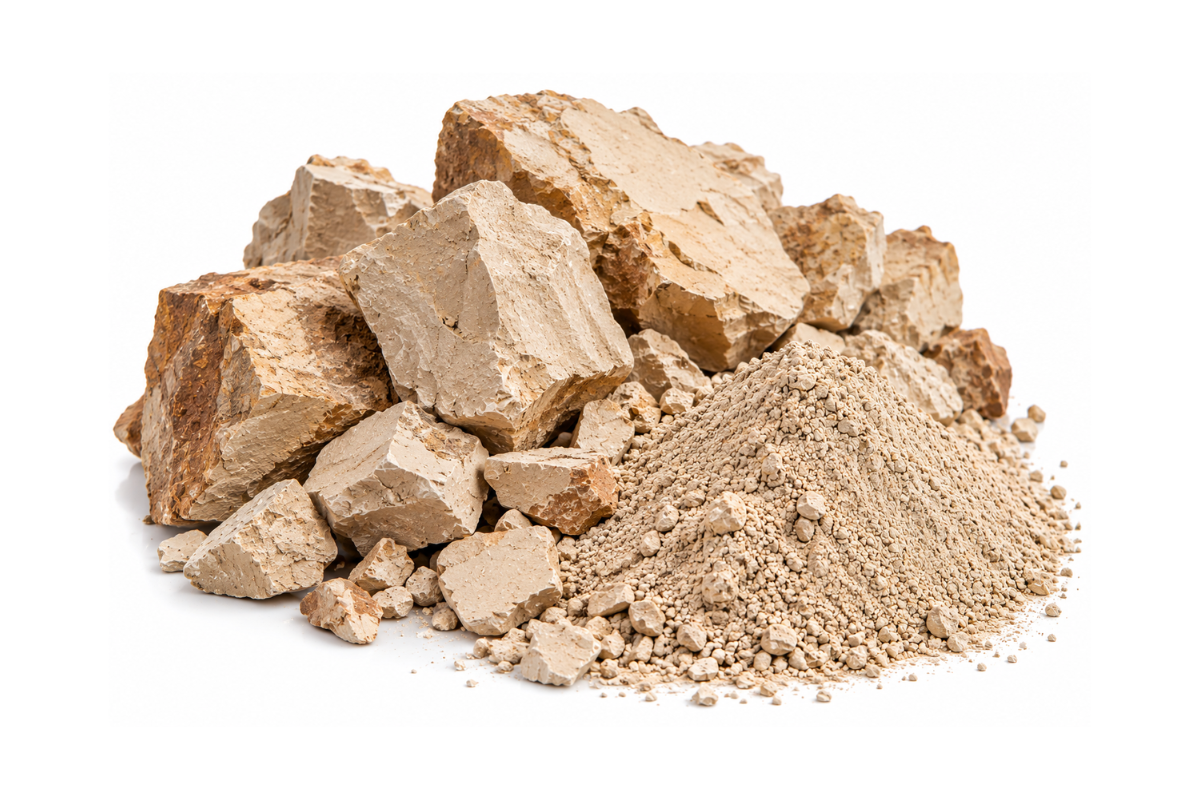
Fire Clay
Applications:
Refractories, Ceramics
Educational Fact
Fire clay is a type of clay that can withstand high temperatures without melting or deforming. It is used to make refractory bricks – the heat-resistant lining inside furnaces, kilns and incinerators.
Interesting Fact
The refractory bricks inside a steel blast furnace must endure temperatures exceeding 1,600°C continuously for years without being replaced – one of the most demanding material challenges in industry.
Minerals
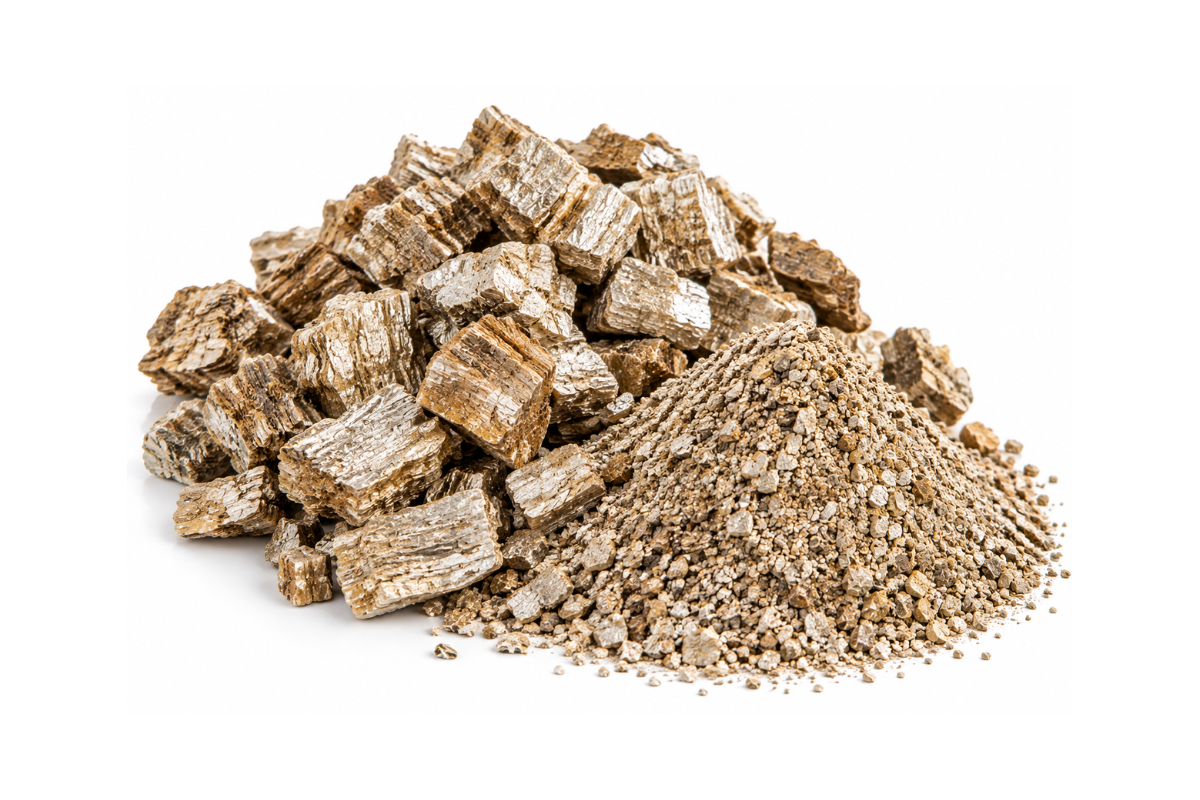
Vermiculite
Applications:
Horticulture, Insulation
Educational Fact
Vermiculite is a hydrated magnesium iron aluminium silicate mineral that expands dramatically when heated – a process called exfoliation. The expanded material is very lightweight and fire-resistant.
Interesting Fact
When raw vermiculite is rapidly heated to 870°C it can expand to 30 times its original volume in seconds. This popped material is the lightweight, spongy vermiculite used in potting soil and insulation.
Minerals
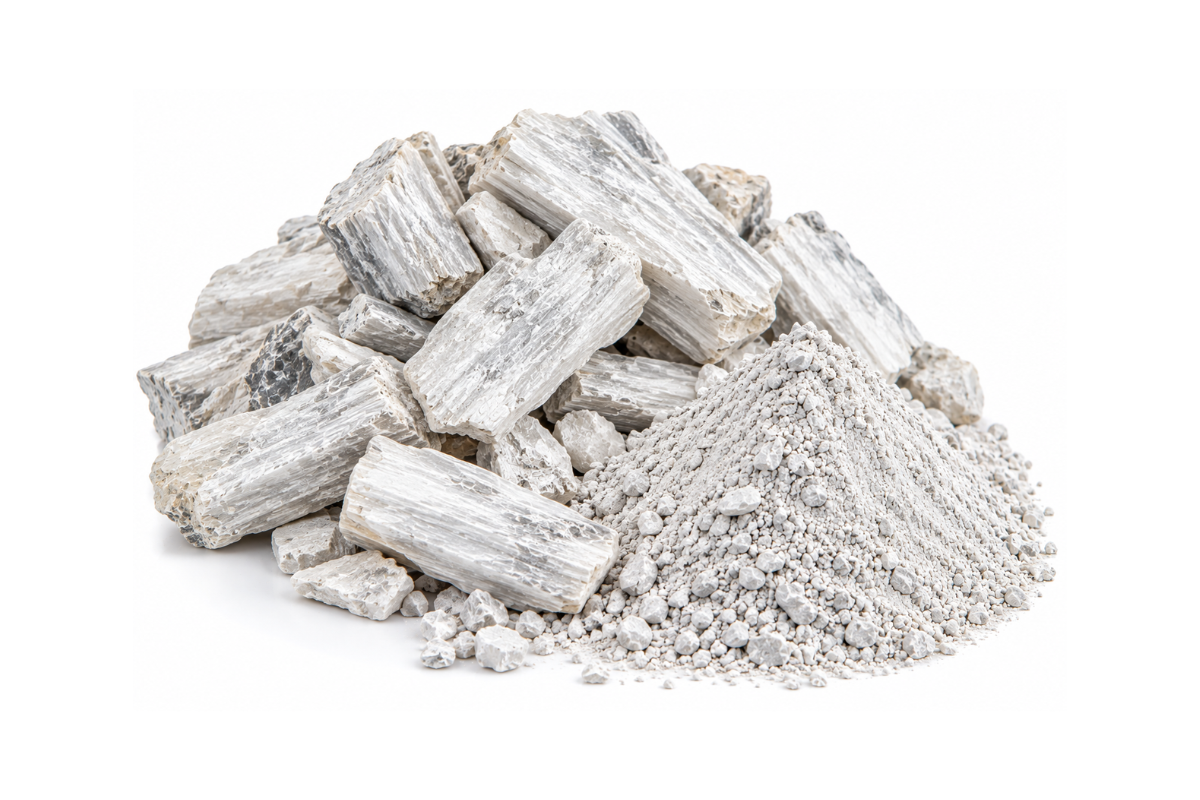
Wollastonite
Applications:
Ceramics, Paint, Plastics
Educational Fact
Wollastonite is a calcium silicate mineral with needle like crystal structure. Its acicular (needle-shaped) crystals reinforce ceramics and plastics the way fibres reinforce concrete.
Interesting Fact
Wollastonite is one of the few industrial minerals that is almost purely calcium silicate – it contains no water and loses virtually no weight when fired, making it exceptionally stable in high-temperature ceramic applications.
Minerals
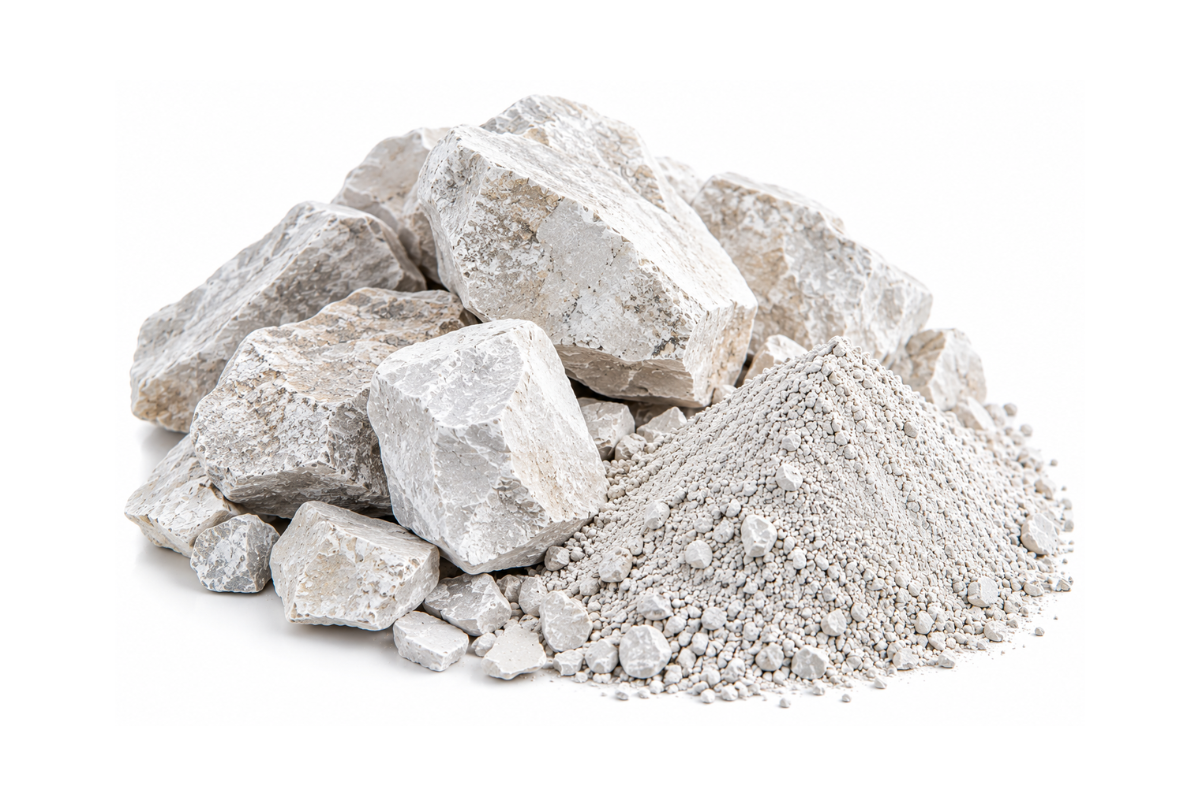
Low Silica High Grade
Limestone
Applications:
Cement, Steel, Chemicals
Educational Fact
Low silica limestone is prized in steelmaking because excess silica creates unwanted slag. High calcium content with minimal impurities allows for cleaner, more efficient steel production.
Interesting Fact
Limestone has been used by humans for over 14,000 years – the Great Pyramid of Giza is faced with highquality limestone, and Roman engineers used it to make concrete that has lasted 2,000 years.
Minerals
Gypsum
Applications:
Cement, Plasterboard, Soil
Educational Fact
Gypsum (calcium sulphate dihydrate) is added to cement during grinding to control the setting time. Without gypsum, cement would set almost instantly on contact with water – making it impossible to work with.
Interesting Fact
The interior walls of the Egyptian pyramids were plastered with gypsum over 5,000 years ago. Gypsum plaster from the pyramids has been analysed and found to be chemically almost identical to the gypsum plaster used in construction today.
Minerals
Ball Clay
Applications:
Ceramics, Sanitaryware
Educational Fact
Ball clay is a highly plastic, fine grained sedimentary clay. It gives ceramic bodies the plasticity needed for shaping – without it, ceramic slips would be too stiff to pour into moulds.
Interesting Fact
Ball clay gets its name from the early mining practice of rolling the clay into balls of about 30 pounds each for transport. It is still one of the most valued clays in the ceramics industry.
Minerals
Pyrophyllite
Applications:
Refractories, Ceramics
Educational Fact
Pyrophyllite is chemically similar to talc but contains aluminium instead of magnesium. Its high alumina content makes it excellent for refractory applications that require both heat resistance and chemical stability.
Interesting Fact
Pyrophyllite was traditionally used in China for carving decorative figurines and seals – its softness (hardness 1-2 on Mohs scale) makes it easy to carve while remaining durable once completed.
Minerals
Kaolin
Applications:
Paper, Paint, Ceramics
Educational Fact
Kaolin (China clay) is one of the purest naturally occurring white minerals. In the paper industry it is used both as a filler (added to the pulp) and as a coating (applied to the surface) to improve brightness and printability.
Interesting Fact
Fine bone China – the translucent white porcelain associated with luxury tableware – gets its whiteness and translucency from kaolin. The finest kaolin deposits in the world are in Cornwall, UK and Guangdong, China.